Blog Articles
DIY Record Expungement
Posted by Brian Laviage on Sunday, Sep 18, 2022
Although you do not need an attorney to manage your petition for record expunction, it cannot be expressed in strong enough terms that these requests are not something that you want to try on your own. Aside from not collecting all the information that will be necessary for you to even file your petition, you run the chance that you may not be able to refile if your petition is dismissed on any technical point. You also must remember that your petition may be opposed by the District Attorney’s office and that they will be represented at your hearing.
National Expungement Week: Helping Those with Cannabis Convictions and More
Posted by Brian Laviage on Wednesday, Sep 25, 2019
The sudden cultural shift to legalizing cannabis and medical marijuana has left a bitter taste in the mouth of those already convicted of possession. It is a cruel irony that marijuana convictions continue to inflict penalties while the newest round of laws make these same practices legal. This change, while welcomed by advocates, is small consolation to individuals, families and entire communities who faced a relentless decades-long assault from the legal system under the euphemistic War on Drugs.
Do Expunged Records Show Up On Background Checks In Texas?
Posted by Brian Laviage on Thursday, Aug 15, 2019
Expungement of a criminal record can greatly improve your life’s outcome, allowing you to attend college, live in student housing, secure professional licensing and certification, land your dream job or even obtain financing for major purchases.
As an experienced record clearing lawyer in Texas, one of the main questions the Law Office of Brian S. Laviage is routinely asked is whether or not expunged criminal records will show up on criminal background checks.
What Should Your Teen Do If They Get Pulled Over?
Posted by Brian Laviage on Wednesday, Jul 31, 2019
As a teen, getting pulled over for any reason by law enforcement can be stressful and scary – especially if he or she is fairly new to driving. In fact, according to a 2018 report by the Bureau of Justice Statistics, nearly 10 percent of all traffic stops in the U.S. in 2015 involves a teen driver under the age of 18.
Whether it’s for speeding, talking on the phone or texting while driving, or for suspicion of driving under the influence, it’s vital for your teen to understand how to react to being pulled over by a police officer. It’s likely to happen, so review these 10 simple rules with your teen driver:
DUIs and Teenagers in Texas
Posted by Brian Laviage on Tuesday, Jun 25, 2019
The state of Texas has enacted tough alcohol-related laws for minors. Because it’s illegal for anyone who’s underage to consume alcohol in Texas, the state has enacted alcohol “zero tolerance” rules for drivers under age 21. This means it’s a criminal offense for anyone under the age of 21 to purchase, attempt to purchase, consume or possess an alcoholic beverage, or operate a motor vehicle with ANY amount of alcohol in their system.
Child Arrested at College? Here's What To Do In Texas
Posted by Brian Laviage on Friday, Jun 7, 2019
If your child is leaving for college in a few months or returning for another semester, it’s important to understand what to do if they are issued a citation or arrested while away at school. We all know college and questionable decision-making seem to go hand-in-hand, however sometimes one bad decision can end with a potentially costly arrest. This can have serious implications for your child’s academic future and personal life.
What's the difference between expunging and sealing a juvenile record in Texas?
Posted by Brian Laviage on Monday, May 20, 2019
If you were referred to a juvenile court for conduct before the age of 17 – even without being taken into custody by law enforcement before the referral – you have a juvenile record in the state of Texas. This includes any Class A or B misdemeanors, felony offenses or conduct indicating a need for supervision (CINS) like underage drinking, truancy or running away.
What Legal Rights Do Juveniles Have When Taken Into Police Custody in Texas?
Posted by Brian Laviage on Thursday, Feb 28, 2019
Unlike adult criminal cases, juvenile crimes are handled in civil proceedings according to “The Juvenile Justice Code” within the Texas family code. In this system, the court is seeking what it deems as appropriate justice AND rehabilitation for the youth.
How the juvenile justice system and criminal system differ in Texas
Posted by Brian Laviage on Monday, Feb 4, 2019
The Texas Juvenile Justice Department is emerging as a national model for reform.
Employment and the Potential Downsides of Having a Criminal Record in Texas
Posted by Brian Laviage on Friday, Dec 28, 2018
Having a criminal record in Texas often results in negative repercussions, many of which last long after the sentence or fine has occurred and the debt to society repaid. One example is employment related; potential employers often categorically deny jobs to applicants with criminal records. It often doesn’t matter when the arrest occurred or even the relevancy to the job.
Subscribe
Follow this blog using your favorite RSS reader.
RSSCategories
Brian S. Laviage

Brian S. Laviage has been practicing law in Texas for 10+ years and is a Licensed Mediator in the State of Texas.
Expungement Attorney
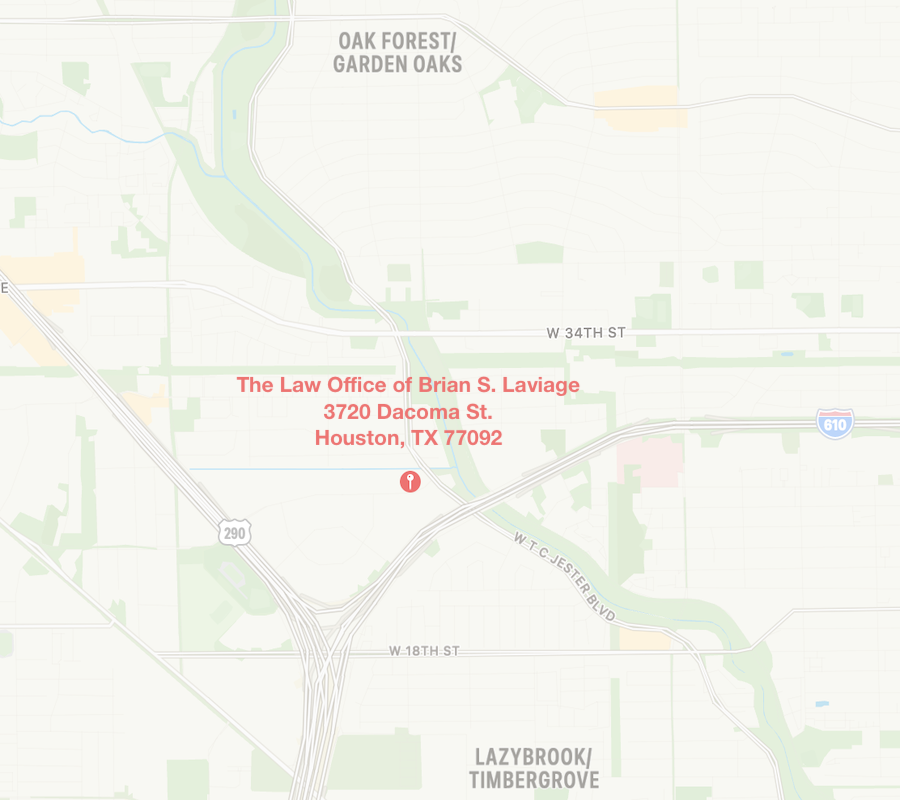
The Law Office of Brian S. Laviage
3720 Dacoma St
Houston, TX 77092 USA